

Cutting Energy Costs and Extending Vacuum Pump Lifetime in Food Packaging
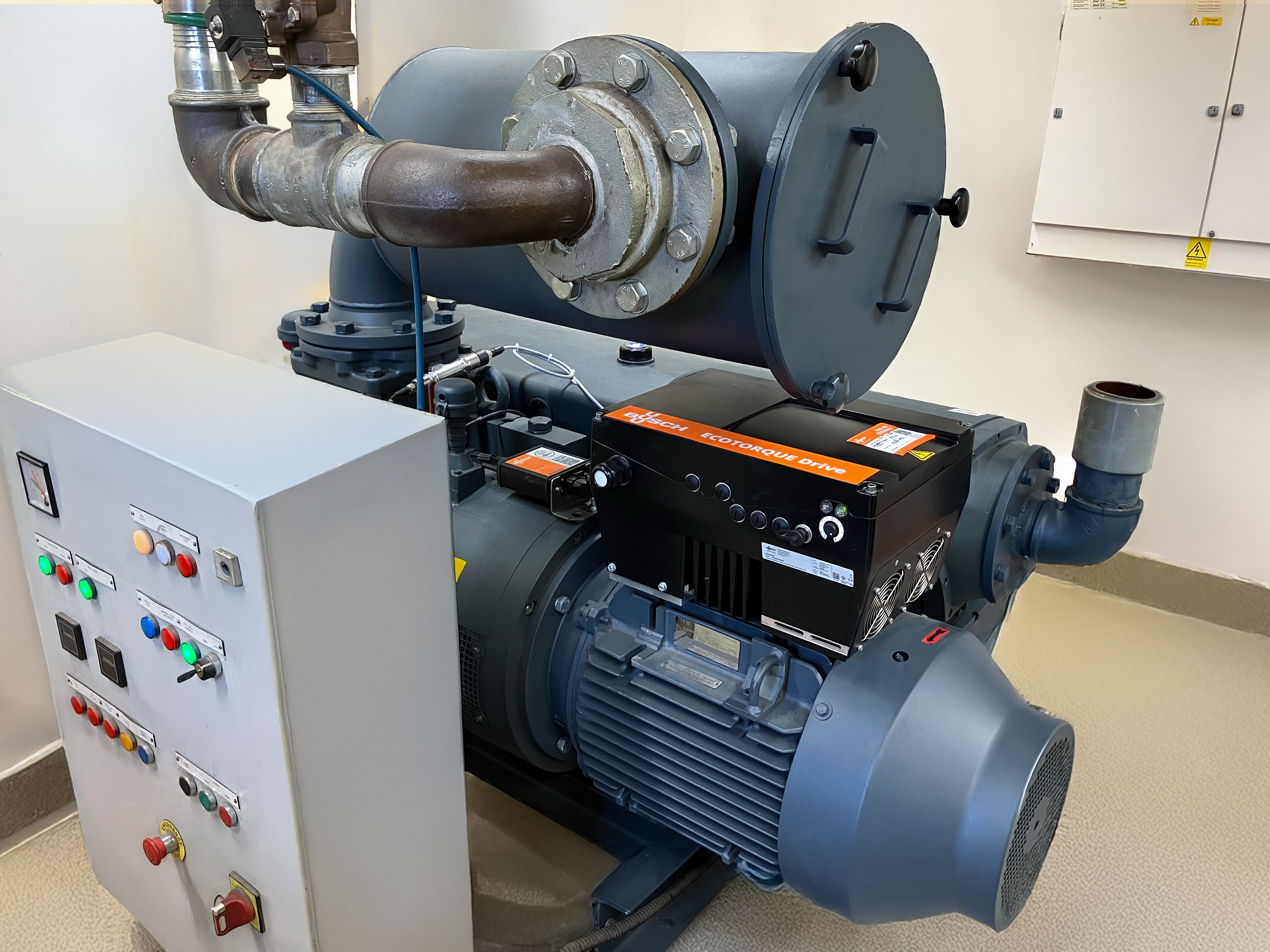
By retrofitting the existing R5 oil-lubricated rotary vane vacuum pumps with ECOTORQUE variable speed drive technology from Busch, Kepak McIntosh Donald achieved up to 50% energy savings. Picture: Busch Vacuum Solutions.
To optimize performance and reduce energy consumption, Kepak relied on Busch Vacuum Solutions, a partner they have worked with for around 15 years now.
ABERDEEN, SCOTLAND, March 9, 2026 /EINPresswire.com/ -- When a family sets a premium cut of beef on the dinner table, or a restaurant serves a perfectly aged steak, few stop to think about how that meat stays fresh, safe, and full of flavor until it arrives at their plates. What ensures this quality is a technology that preserves freshness from the outset: vacuum packaging.
That process comes to life at Kepak McIntosh Donald just outside Aberdeen, one of Scotland’s largest red meat processors. Inside the plant, multiple vacuum packaging lines work tirelessly to ensure that fresh meat is securely packed, preserved, and ready for distribution. At the core of this large-scale operation lies one crucial element: reliable and efficient vacuum supply.
Making food packaging more efficient
To optimize performance and reduce energy consumption, Kepak relied on Busch Vacuum Solutions, a partner they have worked with for around 15 years now. Together, they implemented ECOTORQUE – the variable speed drive (VSD) technology from Busch, which they retrofitted to the facility’s existing R5 oil-lubricated rotary vane vacuum pumps. The results spoke for themselves: By matching the pumping speed to the actual vacuum requirements of the process, ECOTORQUE cut energy usage massively. This not only drove down operating costs but also delivered a major step toward Kepak’s ambitious sustainability and carbon reduction goals.
But the benefits did not stop there: With efficient vacuum pump operation and reduced strain on equipment, Kepak can look forward to lower maintenance requirements and extended service life for their vacuum pumps, ensuring reliability well into the future.
How vacuum packaging works at Kepak
At the heart of Kepak’s packaging process are four main vacuum packaging lines. Each line relies on advanced chamber-type vacuum packaging machines to remove air from packages prior to sealing. In each cycle, portions of meat are placed in barrier bags and loaded into the chamber. The machine lid then closes to seal the chamber, and a Busch R5 oil-lubricated rotary vane vacuum pump, along with a vacuum booster, evacuate the air until the required vacuum level is reached. Once achieved, sealing bars close the bags to create a hermetic seal. The chamber is then returned to atmospheric pressure, and the finished packs are removed for onward handling.
By removing oxygen, the process extends shelf life, prevents spoilage and oxidation, and helps preserve the color, texture, and taste that customers expect. Any downtime or inconsistent vacuum performance would directly impact production targets and product quality.
“Our packaging machines typically run from six in the morning until at least four in the afternoon,” explains Malcolm Baillie, Kepak’s Engineering Manager. “Uptime and reliability of the vacuum supply are absolutely essential to keep product moving.”
The challenge
Traditionally, the vacuum pumps at Kepak operated at a fixed speed of 50 Hz, running continuously regardless of demand. Even when packaging chambers stood idle and no vacuum was required, the vacuum pumps consumed the same amount of energy. ECOTORQUE changed this dynamic and introduced intelligent speed control. By adjusting pumping speed in real time, the system slowed down or switched into Eco-mode during idle phases. This not only cut unnecessary energy use and CO₂ emissions but also reduced mechanical wear by avoiding constant high-speed operation.
What first appeared to be a modest adjustment quickly proved to be a major efficiency gain. For pumps operating continuously through long production shifts, optimizing idle periods quickly translated into significant cost savings, greater operational efficiency, and tangible sustainability gains.
Identifying the opportunity
During a visit to Kepak’s plant, Busch experts recognized an opportunity to reduce the vacuum system’s energy use significantly. Rather than presenting a theoretical case, they proposed a practical demonstration: installing ECOTORQUE on one of the chamber packaging machines to measure the impact directly. “Busch didn’t come to us with just a sales pitch,” noted Malcolm Baillie. “They brought data and a trial plan to measure actual energy use before and after, so we could see the difference for ourselves.”
The trial involved setting up a power logger to monitor baseline energy consumption for a week. ECOTORQUE was then installed, enabling the rotary vane vacuum pump to dynamically adjust speed in response to real vacuum demand. A second week of measurements provided a clear before-and-after comparison. “The technical team from Busch stayed on site to fine-tune the VSD controls so they synchronized perfectly with the machine’s cycle,” added Malcolm Baillie. “That hands-on support is what really created value for us.”
Proven results in energy efficiency
The data spoke louder than any projection: Kepak’s trial showed weekly energy consumption dropping by more than 64%. During active production, energy savings reached around 26%. The biggest impact came during breaks: Thanks to Eco-mode, energy use dropped by an astonishing 94%, as the pump no longer consumed power when no vacuum was needed. Before ECOTORQUE, average power consumption of the vacuum pump during active production was 16 kW. After ECOTORQUE installation, this fell to just 11.8 kW. Across the trial week, this translated into savings of roughly 903 kWh – worth around £207 *, which translates to annual savings of around £10,350* for 1 machine. “The projections Busch provided were already attractive,” said Malcolm Baillie. “But the actual trial results were even better.”
*Based on an energy price of 23p per kWh and 50 weeks of production in a year.
Long-term reliability
The benefits went beyond energy savings. By avoiding continuous full-speed operation, mechanical wear on vanes, bearings, and other components was reduced. Lower oil temperatures slowed oil degradation, extending service intervals and cutting maintenance costs. Together, these factors help improve overall reliability and increase uptime, as the vacuum pumps are less likely to require unplanned maintenance. With ECOTORQUE in place, Kepak can keep its packaging lines running smoothly and consistently, reducing the risk of interruptions to production while also lowering the total cost-of-ownership. ECOTORQUE also provides flexibility to increase pump speed up to 60 Hz if required. This means that if production scales up, the same pump can deliver up to 20% higher capacity without additional investment in new equipment.
Driving sustainability
Kepak operates under ambitious group-wide sustainability goals, including reducing CO₂ footprint and improving energy efficiency. Initiatives like installing ECOTORQUE directly support these goals. “We are continually working with our sustainability teams to cut waste and improve efficiency,” explains Malcolm Baillie. “This project not only saves energy but also reduces our carbon impact per package.”
Following the successful trial, Kepak has rolled out ECOTORQUE to other suitable pumps on site and plans to extend the solution to additional Kepak locations, multiplying the benefits across the group.
Smooth implementation and expert support
For Kepak, the transition was seamless. Busch supplied the VSD, managed installation and commissioning, captured and analyzed the data, and produced a detailed performance report. Their technical experts also remained on site to fine-tune the system in real production conditions. For Kepak, ECOTORQUE proved to be far more than a simple energy-saving device. It generated measurable cost savings, supported both maintenance and sustainability goals, and showcased the impact of data-driven optimization. By reducing mechanical wear, it has also enhanced reliability. Reduced downtime and the ability to increase pump capacity can contribute directly to higher overall productivity. “This project paid for itself quickly and fits perfectly within our wider efficiency strategy,” concludes Malcolm Baillie.
Dr Sandra Thirtle-Höck
Busch Group
+49 4964 418021460
email us here
Legal Disclaimer:
EIN Presswire provides this news content "as is" without warranty of any kind. We do not accept any responsibility or liability for the accuracy, content, images, videos, licenses, completeness, legality, or reliability of the information contained in this article. If you have any complaints or copyright issues related to this article, kindly contact the author above.
