

Solaren Makes the Case for Solar Ownership Over Lease as Philippine Energy Costs Continue Rising
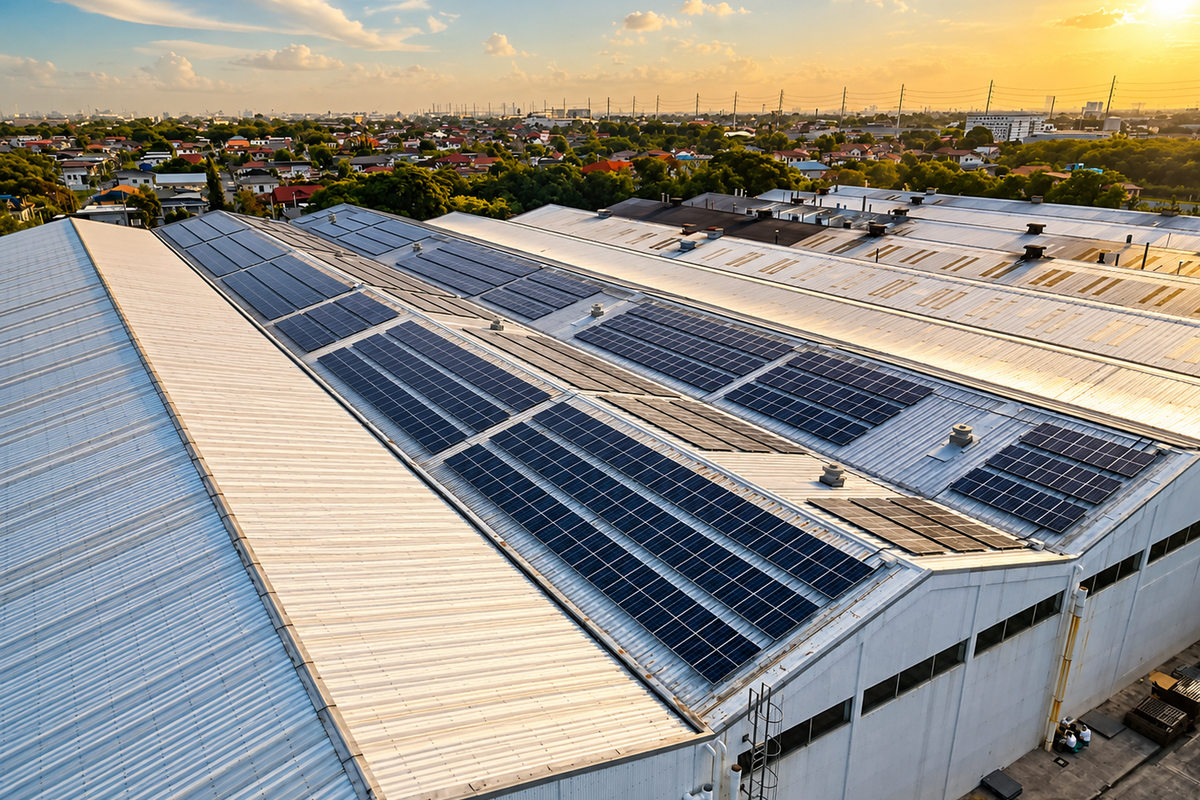
Solar ownership represented by scale: a commercial rooftop system built to reduce electricity costs and create long-term value.
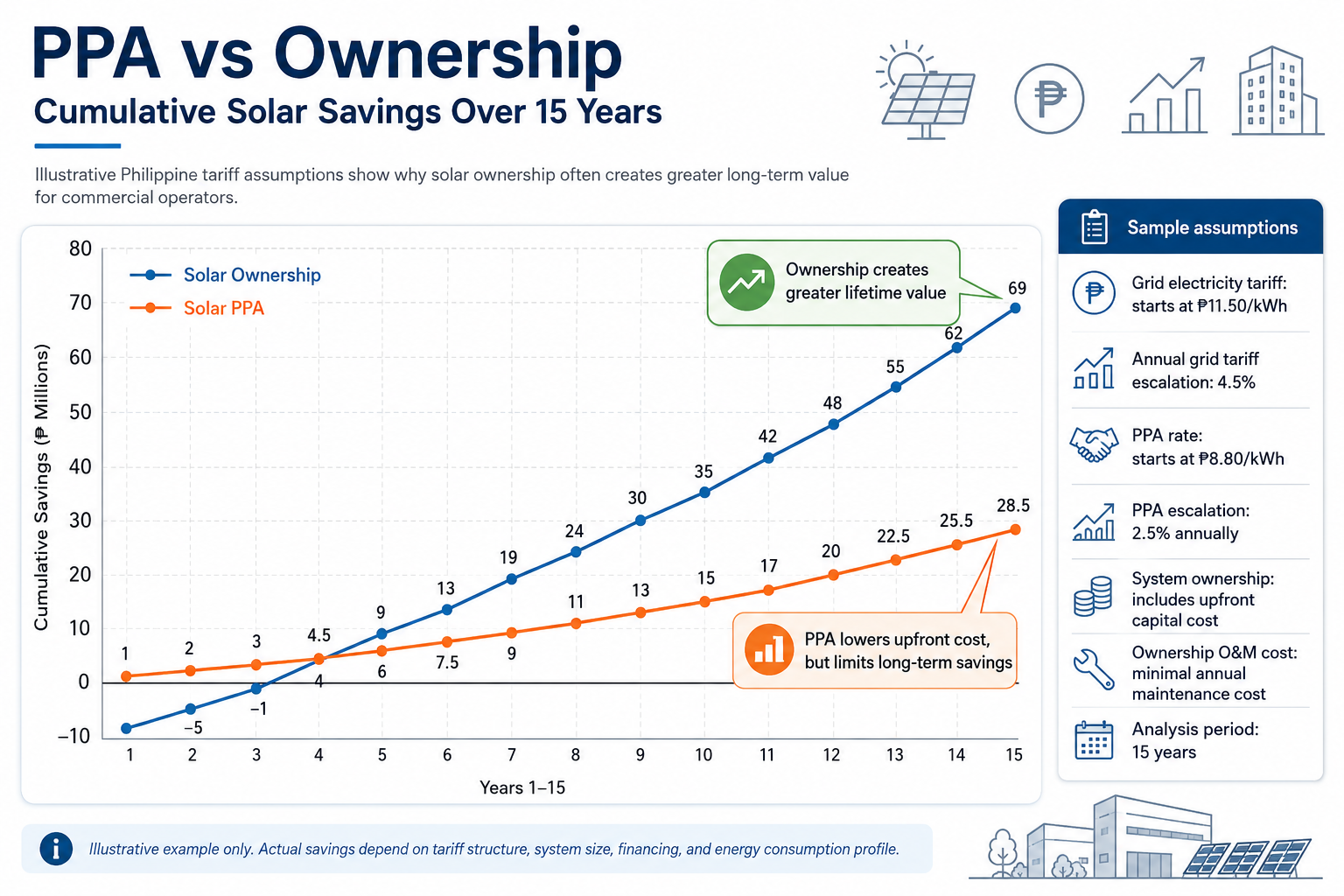
Financial comparison graphic showing how solar ownership can create greater cumulative savings than a solar PPA over 15 years under illustrative Philippine electricity tariff assumptions.
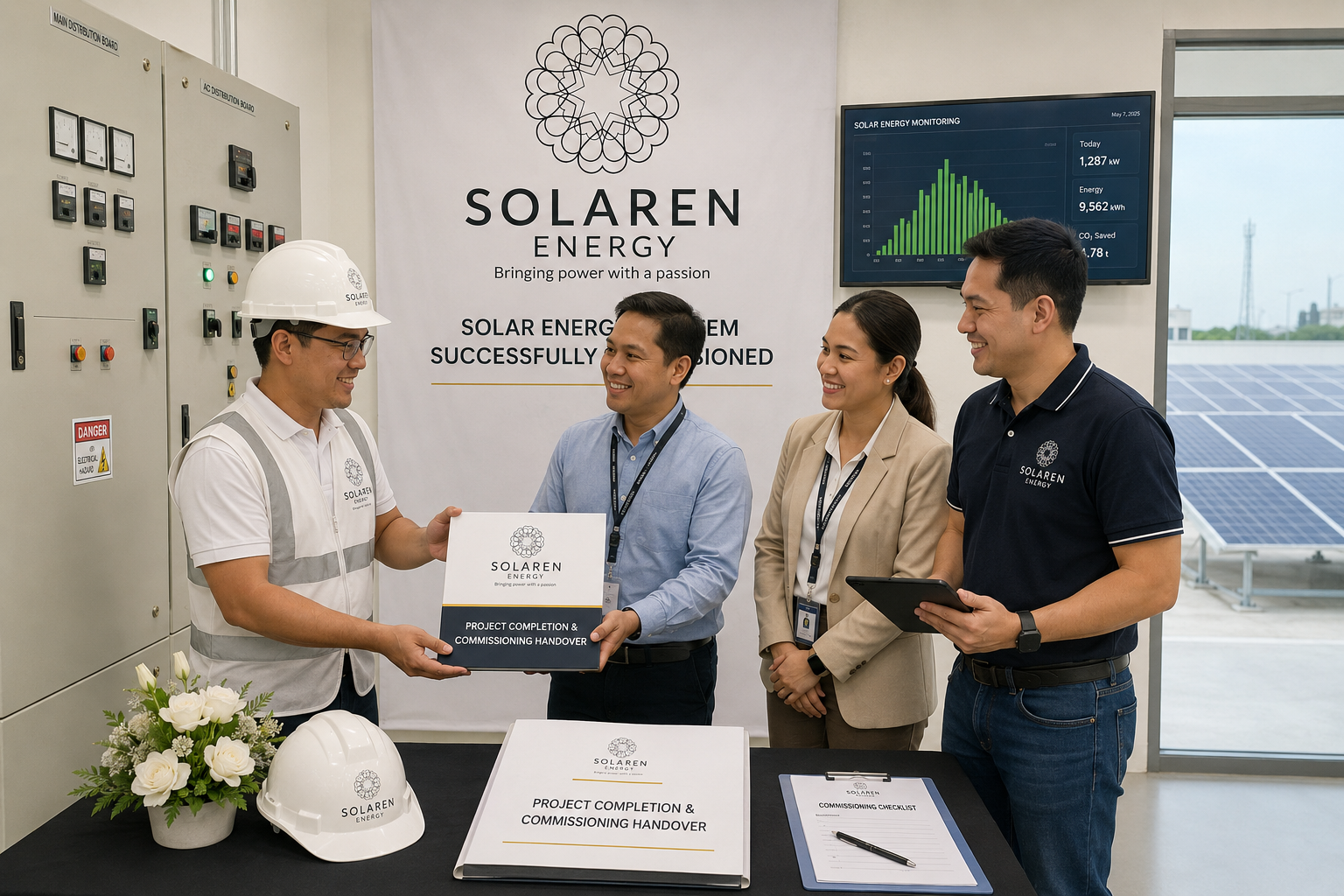
Solaren Renewable Energy Solutions Corp. completes the project completion and commissioning handover for a commercial solar energy system in the Philippines.
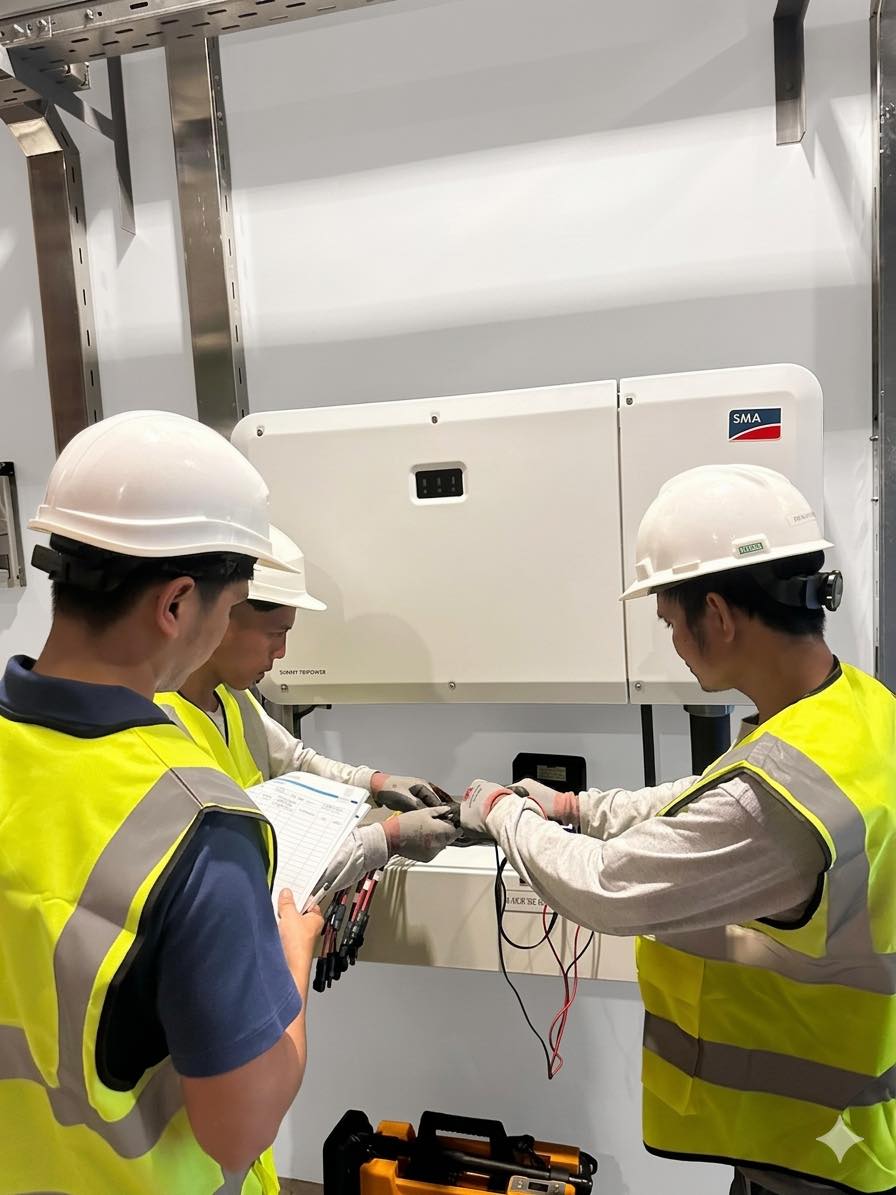
Solaren Renewable Energy Solutions Corp. engineers inspect premium solar equipment, meters, and monitoring components as part of a professional commercial solar energy installation.
Philippine businesses that own solar systems outperform those renting capacity as power tariffs remain among Asia’s highest.
If electricity prices rise faster than the contracted escalation rate, the gap between what the operator pays and what the system could have saved may narrow or even reverse. In the Philippines, where distribution cooperative tariff structures, generation charges, and transmission costs have increased over the past decade, the debate around solar ownership vs PPA Philippines operators must navigate comes down to one question: who captures the upside? The operator who owns the system outright retains the full benefit of every peso per kilowatt-hour increase from the grid. For the PPA customer, it only represents a limited discount. Ownership also affects operational control. Solaren clients who own their systems can expand capacity when business demand increases, integrate battery storage as the economics improve, participate in net metering programs that credit excess generation, and make design modifications when operations change.
The company acknowledges that ownership requires access to capital, and that this can be a real barrier for some operators. Understanding the real cost solar panel installation Philippines businesses carry — and how financing structures change that calculation — is central to how Solaren approaches commercial projects. Equipment financing, agricultural and commercial loans, and leasehold financing arrangements allow clients to own their systems without requiring full upfront payment.
With more than 85 megawatts installed across over 2,500 commercial and industrial projects in the Philippines, Solaren's portfolio includes operations that have already moved through full payback and into the compounding savings phase that ownership uniquely provides.
Ronnie Lorenzo
Solaren Renewable Energy Solutions Corp.
+63 917 879 6037
email us here
Visit us on social media:
LinkedIn
Instagram
Facebook
YouTube
X
Legal Disclaimer:
EIN Presswire provides this news content "as is" without warranty of any kind. We do not accept any responsibility or liability for the accuracy, content, images, videos, licenses, completeness, legality, or reliability of the information contained in this article. If you have any complaints or copyright issues related to this article, kindly contact the author above.
